
Revolutionizing Lake Conservation: Continuous AI-Powered Water Monitoring

Lakes and their surrounding watersheds are vital ecosystems, but they face constant threats from pollution and environmental changes. Traditionally, monitoring water quality has been a hands-on process, involving periodic sampling with handheld instruments. While effective for a snapshot in time, this method makes it challenging to detect subtle, ongoing changes or rapidly address sudden problems.
A new era in environmental monitoring is emerging, leveraging the power of Artificial Intelligence (AI) and advanced sensor technology to provide continuous, remote oversight of these precious water sources. This innovative approach moves beyond manual checks, offering a sophisticated early warning system for environmental managers and conservationists.
The Power of Continuous Monitoring
The core challenge with manual testing is the discontinuity of data. A lake’s health can fluctuate daily based on weather, runoff, and human activity. Traditional methods often often miss these critical shifts.
By deploying robust, fixed sensor networks, we can gather real-time data on key water quality indicators (such as pH levels, dissolved oxygen, turbidity, and temperature). These sensors transmit data continually to a central system, providing an uninterrupted stream of information that paints a comprehensive picture of the lake’s health.
AI: The Brain Behind the Data
This is where AI becomes a game-changer. Simply collecting vast amounts of data isn’t enough; we need to interpret it effectively.
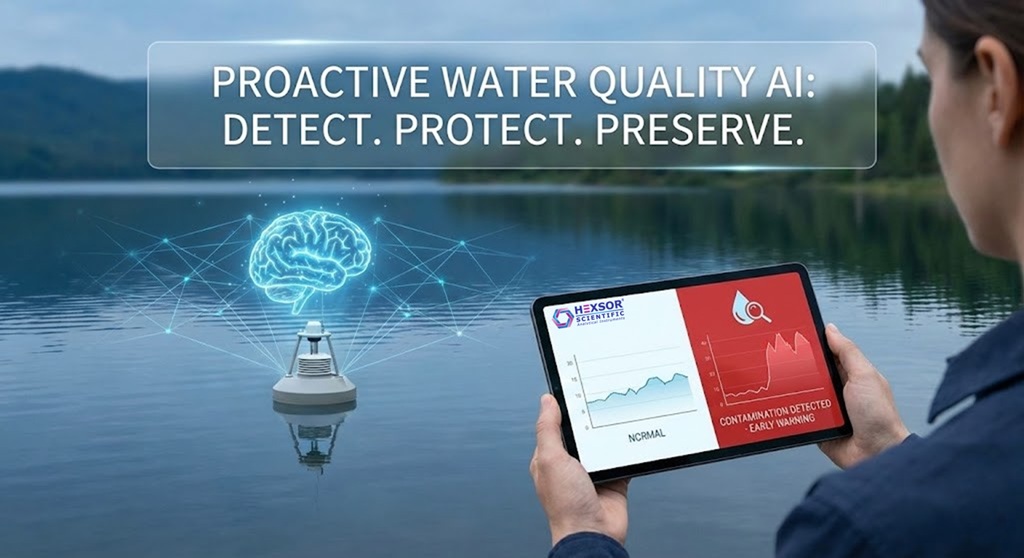
The AI model is fed historical water analysis data, learning the natural, healthy patterns and rhythms of a specific watershed. It establishes a “baseline” for normal conditions. Once operational, the AI constantly compares incoming real-time sensor data against this baseline.
The beauty of the system is its ability to recognize anomalies that might escape the human eye during a routine field visit. The AI can identify subtle trends that suggest an emerging problem—perhaps a slow buildup of agricultural runoff following a rainy season, or an industrial discharge spike during specific hours.
When the AI detects a significant deviation or a developing negative trend, it instantly triggers an alert. This transforms monitoring from a reactive, periodic process into a proactive, predictive one.
An Early Warning System for a Healthier Future
This integration of AI and sensor technology is an invaluable tool for stewardship. It enables water managers to intervene quickly, pinpoint the source of a potential issue, and mitigate environmental damage before it becomes a crisis.
The dedicated team at Hexsor is working tirelessly to refine these models, ensuring we provide meaningful, actionable information to our partners. Our goal is to transform raw data into clear insights that protect our shared water resources.
Key benefits of this approach include:
- Constant monitoring ensures no critical event goes unnoticed.
- Early Problem Detection: Subtle shifts are flagged immediately, allowing rapid response.
- Data-Driven Decision Making: Management strategies are informed by comprehensive, reliable data insights.
- Resource Efficiency: Automation reduces the need for constant manual fieldwork, allowing experts to focus on action and remediation.
By harnessing technology to listen continuously to our lakes, we are better equipped to protect these vital resources for future generations. This smart monitoring approach is not just an technological upgrade; it’s a commitment to a healthier, more resilient environment.
Join Us
As we move into field testing and deployment phases, Hexsor invites serious partners to collaborate on pilot programs and real-world demonstrations. Together, we can accelerate the transition toward resilient, intelligent water management systems that protect our shared future.
Contact us today to integrate Aqualight into your monitoring network or pilot it in your region.
